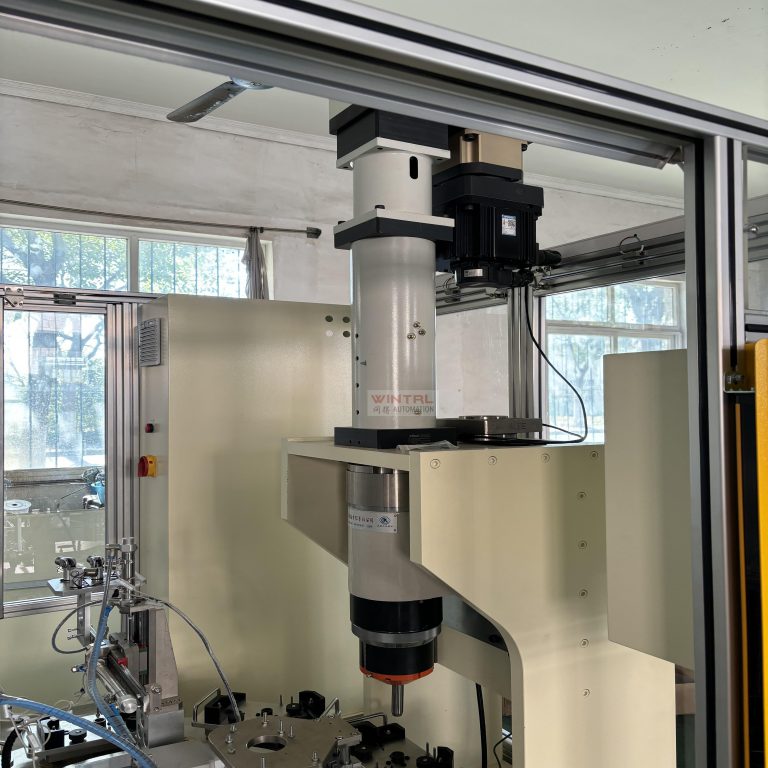


Key Conclusions:Pressure sensors in servo presses are typically installed between the ram and the drive train; they convert the pressing force into an electrical signal in real time and, together with a displacement encoder, generate a force-displacement curve. They serve as a quality control element rather than a simple overload protection device.
Key Indicators for Quality Assessment
The commonly used capacity ranges are 1,000 kg (74 mm outer diameter) and 2,000 kg (104 mm outer diameter), with an accuracy of approximately one-thousandth of the capacity.
If the measurement range is set too wide, the resolution of the curve for low-tonnage press-fitting operations will decrease significantly; generally, the peak process force should fall within the 30%–80% range of the measurement range.
Key Points for Anomaly Detection
- The sensor mounting surface must be coaxial and level; off-center loading will introduce lateral forces, resulting in signal spikes and reduced repeatability.
- For calibration, it is recommended to use a standard force gauge to perform multi-point loading, covering at least the commonly used force ranges, and to retain calibration records for traceability.
- When used in conjunction with a displacement encoder, it can detect typical defects such as missing parts, incorrect assembly, uneven compression, and sudden drops in force—something that cannot be achieved with a single pressure threshold.
Common Criteria for Press-Fit Curves
| Criteria | Detected Anomalies | Key Settings |
|---|---|---|
| Laminating Point Location | Workpiece not properly secured; positioning drift | Triggered by a sudden pressure surge, used as the origin of the curve |
| Slope of the Rising Segment | Missing parts, excessively soft material, abnormal interference fit | Statistical Boundaries Based on a Sample of Qualified Items |
| Peak Force | Overvoltage, Jamming, Incorrect Installation | Match the sensor's measurement range to avoid operating at full scale for extended periods. |
| Finish Line | Insufficient compression, over-compression | Direct Reading Under Position Control |
| Upper and Lower Envelope Windows | General Process Exceptions | Select 30–50 conforming items to establish a baseline |
Related Equipment and Further Reading
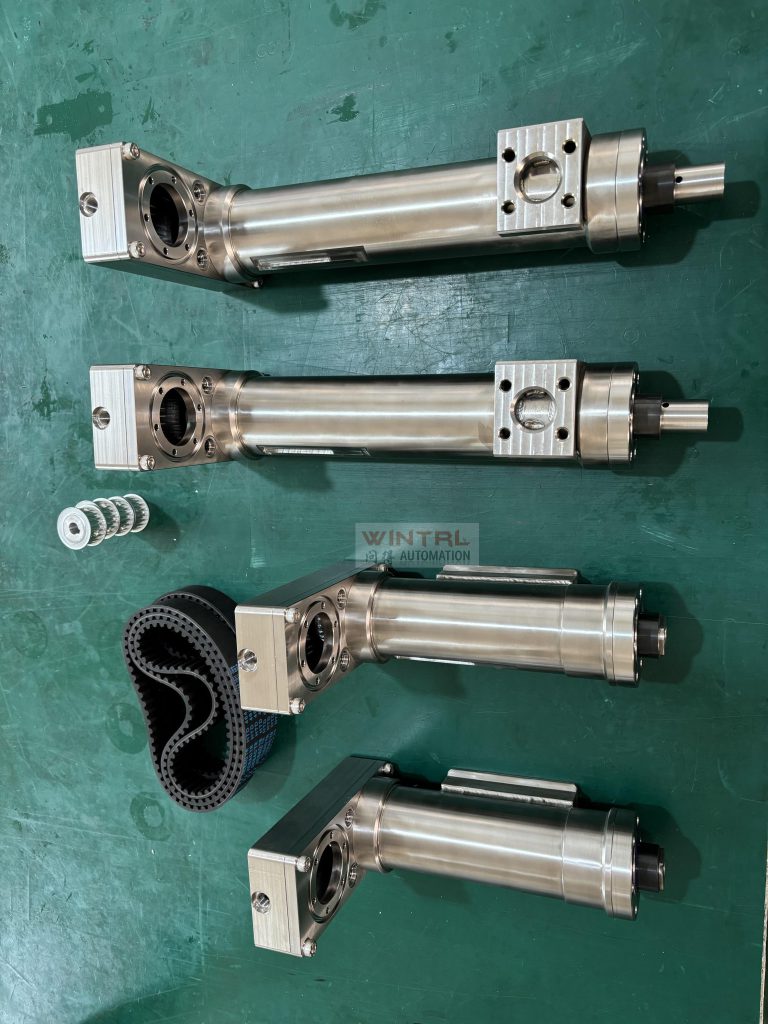
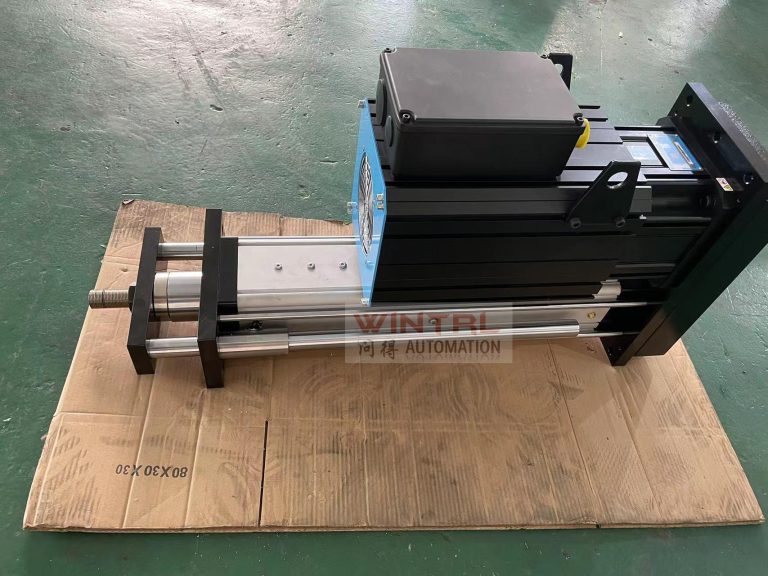
WINTRL has previously delivered similar equipment for comparable workstations, which can serve as a reference for this solution:Positioning Pins and Steel Ball Press-Fit Equipment、WL Series Servo Electric Cylinders、High-Speed Chain Automated Assembly Line。
For systematic principles and selection methods, see The Complete Guide to Servo Presses; For a complete list of models and specifications, see Product Center。
Frequently Asked Questions
What does "sensor accuracy of one-thousandth" mean?
This refers to one-thousandth of the full scale; the theoretical resolution for a 2,000 kg capacity is approximately 2 kg.
Is it enough to just install a pressure sensor?
That's not enough; displacement feedback is also required to generate a determinable force-displacement curve.
If you need to calculate thrust, stroke, or the determination window based on your workpiece, or if you would like to request technical documentation, please visitDownload Product Brochures、prescription, or directly through Contact Us Submit your operating conditions, and engineers from Shanghai WINTRL Automation will provide product selection recommendations. For company background, seeAbout Us。